Play Shogi Online Free
What Is Shogi?
Shogi, often called Japanese chess, is a two-player strategy game played on a 9×9 board. Players take turns moving pieces with the goal of checkmating the opposing king. Its defining rule is the hand: captured pieces do not leave the game, but change sides and can later be dropped back onto the board. Most pieces can also promote after entering the far three ranks. Play against AI, share one device with another player, or create an online room - no signup or download required. AI and local two-player modes also work offline.
How would you like to play today?
There is no single 'proper' mode. Choose the one that fits whether you want to learn the rules, play someone beside you, or invite a friend remotely.
Your first game does not need to be elegant - just understand each move
Every turn gives you two choices: move a piece already on the board, or return a captured piece from your hand to an empty square. The second action is called a drop, and it is shogi's most distinctive rule. Captured pieces do not disappear; they turn around and rejoin the game for the other side. Sente moves first, and the direction a piece points shows which side it belongs to. Once you can tell a move from a drop, you can finish a complete game.
In the opening, start with choices you are unlikely to regret: move the king away from its starting square, use gold and silver to cover the gaps around it, and clear lines for the rook or bishop. You do not have to capture every pawn you can see. A piece you capture joins your hand, but a piece you sacrifice becomes help for your opponent. Judge an exchange by what enters both hands, not only by what leaves the board.
Before each move, ask three questions: Is my king safe now? Which opposing piece in hand could be dropped most dangerously? What is my opponent's strongest reply after this move? Before a pawn drop, also check whether that file already contains one of your unpromoted pawns and whether the drop would give immediate checkmate. Taking your time is fine. If you can explain the purpose of a move, you have learned more than by playing instantly on instinct.
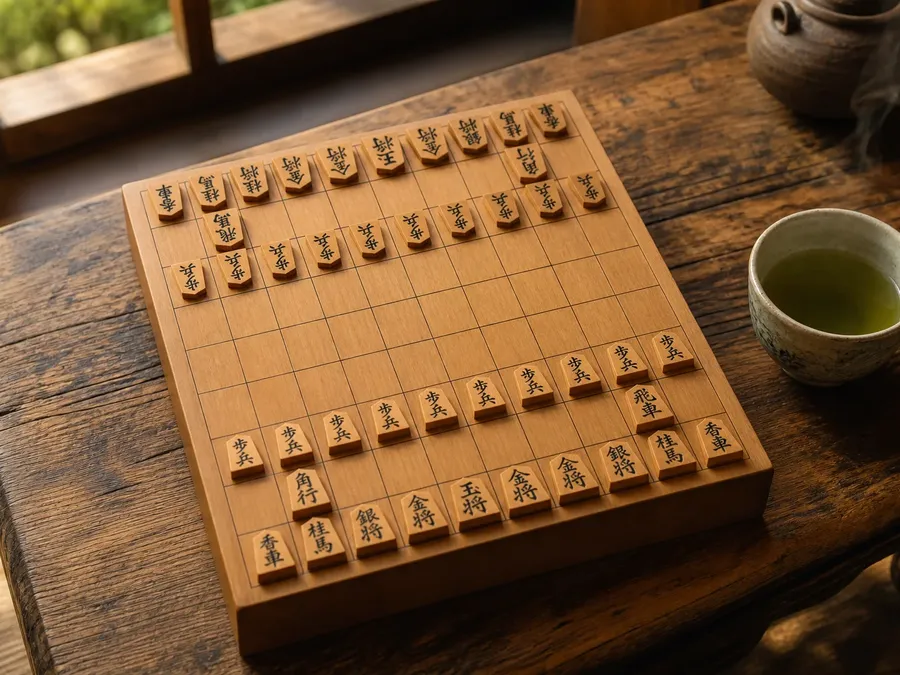
When no move stands out, make the king comfortable first
Look around your king. Are gold and silver guarding it, are its escape squares blocked by your own pieces, and do any rook or bishop lines point straight toward it? Instead of pushing a pawn without a plan, complete one small task: move the king from its starting square, make two defenders protect each other, or open a line for a major piece. Once the position is settled, it becomes easier to see which side to attack.
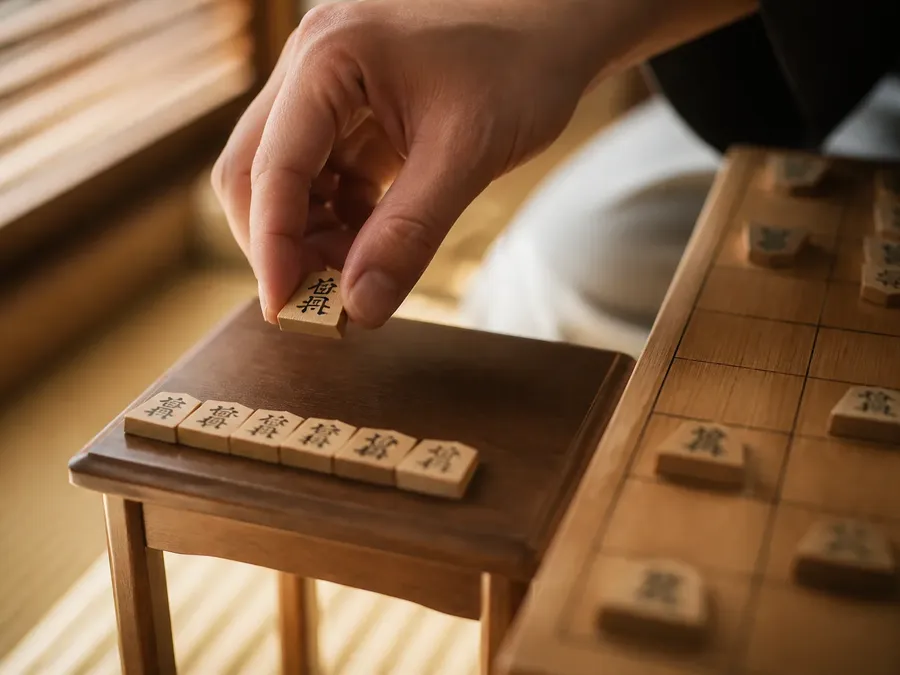
The most dangerous piece may not be on the board yet
Think of the opponent's hand as pieces searching for landing squares. If they hold gold or silver, inspect the spaces beside your king; if they hold a knight, watch for a jumping check; if they hold a pawn, look for a sequence of checks it might support. Give your own drop a job too: check, reinforce, seal an escape, or occupy a key square. If you cannot name its job, it can usually wait.
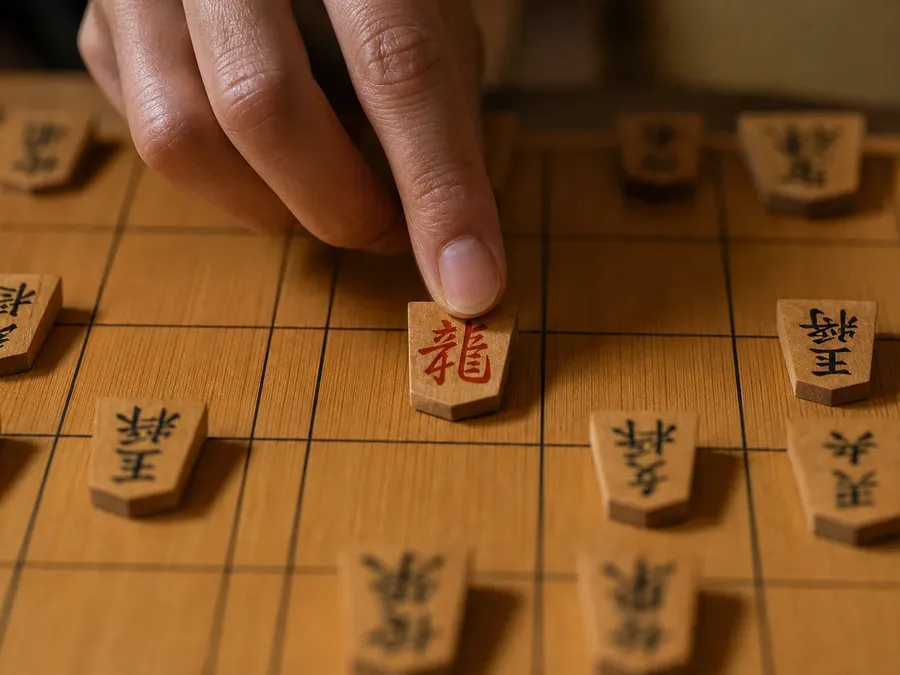
Promotion is a trade between movement patterns
A promoted rook or bishop keeps its long-range movement and gains control of nearby squares, so it is usually much stronger. Silver, knight, lance, and pawn instead begin moving like gold: steadier, but without their old directions or jumps. When the prompt appears, do not ask only whether promotion is allowed; ask what movement you are willing to exchange. After the game, revisit one promotion that made you hesitate and compare both choices.
Frequently Asked Questions
What rules does this site use for the hand and promotion?
This site uses standard 9×9 hon-shogi. Sente moves first. Captured pieces enter your hand, and on your turn you may drop one onto any legal empty square. Most pieces may promote when they enter, leave, or move within the opponent's far three ranks. The gold general and the king do not promote. Checkmate wins. Illegal drops - including nifu, uchifuzume, and a piece that would have no legal move afterward - are refused by the board and are never treated as legal moves.
How does this site's AI differ from typical browser shogi opponents?
This site offers multiple AI levels, and the entire search runs in your browser. While the engine is thinking, the sidebar displays search depth, node count, speed, and the principal variation. On a computer, the Master level runs the YaneuraOu engine with AobaNNUE neural-network evaluation: a trained network estimates the position, then search deepens the analysis, rather than relying only on a hand-tuned evaluation table. Master is not available on phones or tablets. Hints use the same search as the level you have selected; they do not switch to the strongest level.
Why can a position that still looks stable fall into checkmate on the next move?
In most cases the decisive threat did not appear only on the final move. An earlier drop from the hand, a double check, or a continuing attack after promotion was often overlooked. Replay to the critical move, examine the opponent's hand first, then check whether vacant squares and escape routes around your king have been sealed. In shogi, threats arise from the board and the hand together. Reviewing both makes the weakness easier to identify than focusing only on the final mating sequence.
Must I memorize joseki before playing? How should I choose the first move?
No. In the early stages, a few opening goals matter more: move the king away from its starting square, protect its surroundings with gold and silver generals, and open lines for the rook or bishop. The exact square of the first move usually matters less than whether the following moves support one another. Once those steps feel natural, joseki such as Yagura or the Mino castle become easier to understand.
How should I use hint, undo, and replay without relying on the answer?
First formulate two candidate moves and state the purpose of each - reinforcing the king, applying pressure, dropping from the hand, or promoting - then open the hint and compare. If the hint differs, determine whether it answers a direct threat or contests a key square. Use undo to return to the branching point and try the other idea. In replay, identify the first move that lost the initiative, rather than examining only the final mating shape.
If I change AI strength during a game, does the game restart?
No. The position remains unchanged. The new level takes effect immediately for subsequent AI replies and hints. If it is already the AI's turn, the engine reconsiders that move at the new level. The selected level is stored in this browser and remains after a refresh.
How do I play as Gote so the AI moves first? Can I switch sides during a game?
In the sidebar under Play as, select Gote. While the board is still empty, the seat changes immediately, the AI plays the opening move, and the board is rotated so that your camp remains at the bottom. After any move has been played - and after the game has ended - selecting a different side asks for confirmation and starts a new game, resetting the current progress.
If I refresh or close the page, is the current game still available?
Yes for AI practice and local two-player. The position, move list, AI level, your seat, and resign or draw results are stored in this browser, so you may continue after a refresh or when you reopen the page. This site does not use accounts. Clearing this site's data, or switching browsers or devices, removes that record. Online rooms are separate: a brief disconnection may restore your seat, but an expired or closed room cannot be recovered.
What does think time control, and is Master available on phones?
Think time appears only with Master on a computer. It sets the maximum search time per move, from 2.5 to 60 seconds, with a default of 5 seconds. Longer limits generally allow deeper search and more stable replies. Phones and tablets do not offer Master or this control; other levels run with their own preset search budgets.
Can I resign against the AI? Are the rules the same for local and online play?
Yes. Below the board you will find Resign and Offer draw. Resign requires confirmation, then ends the game with a win for your opponent. You may offer a draw only after at least one move has been played; the AI accepts or declines according to the position and usually refuses when it stands better. All three modes share the same winning conditions: Sente moves first, drops from the hand are allowed, and checkmate wins. The difference is how play is arranged - AI practice is solitary, local two-player shares one device, and online synchronizes two devices through a room link. Once an online move has been synchronized, neither side may undo it unilaterally.